



Walkie talkies for stores: how to improve communication in retail
In the retail sector, the customer shopping experience is played on seconds. A customer waiting several minutes to know if a size is available in stock, a blocked checkout waiting for an item number, or an associate who has to walk through the entire store to call a colleague are inefficiencies that directly affect turnover and brand perception.
To solve these critical issues, the adoption of walkie talkies in stores has established itself as the most effective operating standard. Unlike smartphones or paging systems, instant radio communication allows staff to coordinate hands-free, without leaving departments unattended and without letting the customer perceive the technical steps of teamwork. In this guide, we'll explore why two-way radios have become a critical tool in modern retail and what technical features to consider before equipping your team.
Why walkie talkies are indispensable at the point of sale
Unlike operational environments where robustness and capacity are priorities, such as walkie talkies for construction sites, specific needs come into play in retail: spaces are shared with customers, the aesthetics of the staff must remain taken care of and internal communications must be discreet. Key benefits of introducing a fleet of in-store two-way radios include:
Elimination of waiting times: The sales assistant can check the availability of a shoe or an item of clothing by talking directly with the warehouse worker, always remaining close to the customer.
Constant supervision of departments: No salesperson should leave the aisle or the sales floor to look for the manager or a colleague from another sector.
Immediate support at the checkout barrier: When sudden queues form, the main checkout may require an additional station to be opened immediately with a single touch, making flows smoother.
Security and discretion: In case of emergencies, theft attempts or illness, staff can alert security and colleagues in real time without alarming the public present.
How to choose walkie talkies for shops: the essential requirements
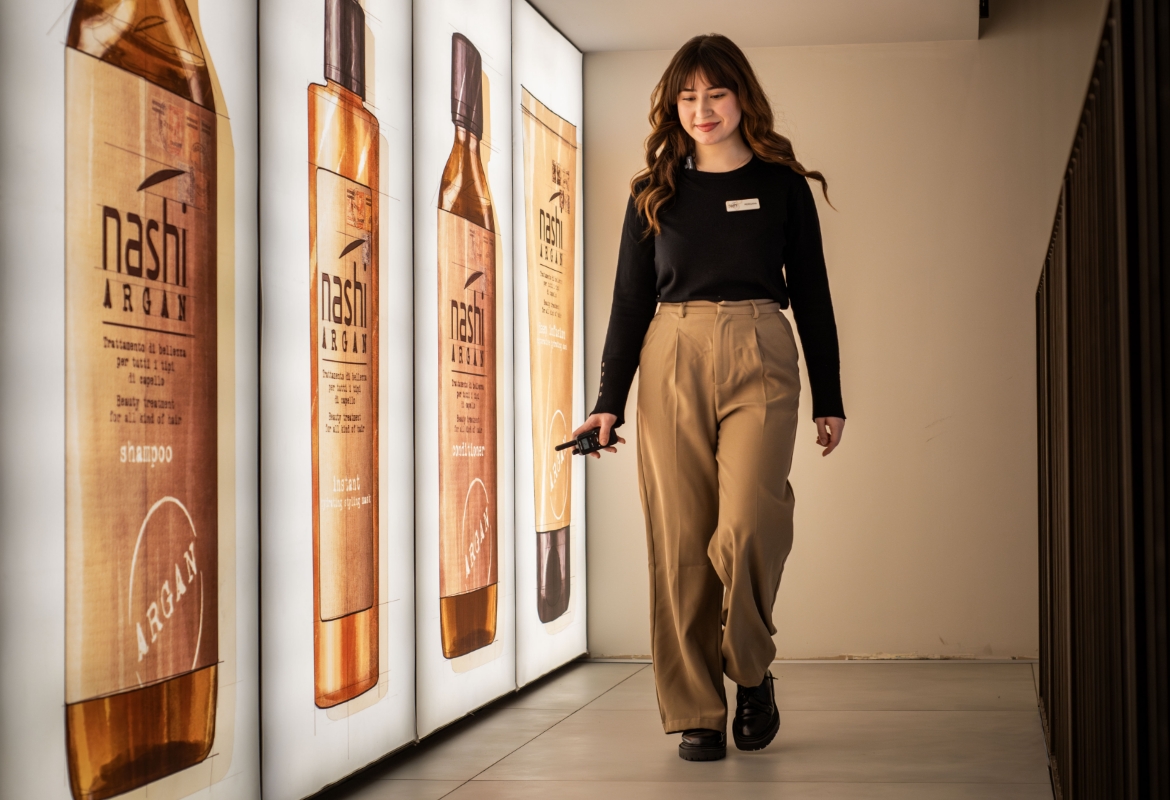
Not all professional radios are suitable for a commercial activity. To understand which walkie talkie to choose, it is important to evaluate the context of use and the needs of those who will have to use it every day. In retail, for example, a heavy model or with a bulky antenna would be uncomfortable during 8-hour shifts and not very suitable for the uniform of the staff. When evaluating walkie talkies for stores, there are a few key factors to consider:
1. Featherweight and ergonomics The device should be compact and lightweight (preferably under 120–130 grams). The presence of a rotating belt or pocket clip allows staff to move easily between shelves, stairs and dressing rooms without the device getting in the way.
2. Mandatory use of earphones (Audio privacy) In retail, the customer does not have to listen to internal communications, such as stock, loading prices or service codes. Store radios must have discreet ear microphone connectors, equipped with durable cables and sanitizable earphones.
3. Intuitive keys and settings lock Sales staff should focus on customers, not on tuning the radio. A good store walkie talkie should have an easy-to-activate front PTT button and, most importantly, a lockable menu, which prevents unintentional channel changes or volume changes caused by rubbing against clothing.
4. Multiple Charging Bases
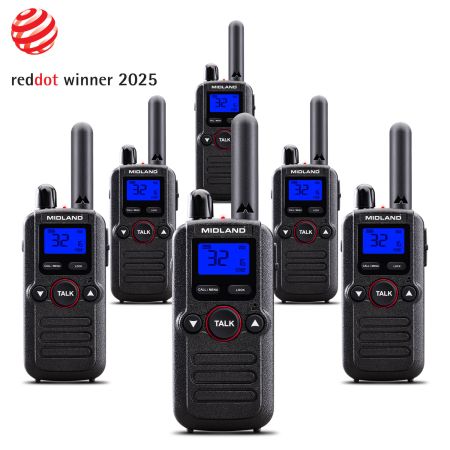
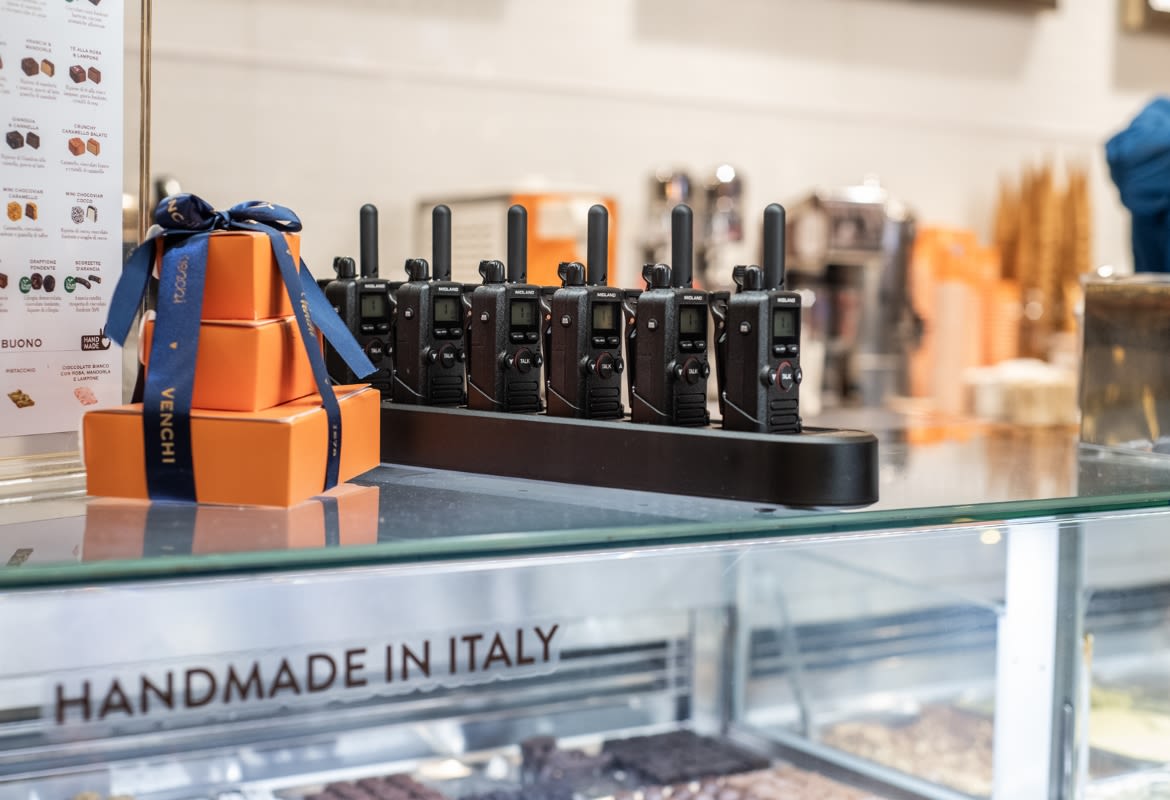
At the end of the shift, the management of the radio fleet must be immediate. Having charging stations with several bays (with 6 or more stations) allows you to gather all the equipment in the back of the shop or in the central cash register, leaving them ready and charged for the next shift without having to manage dozens of individual cables.
5. PMR446 frequencies for free use
For in-store communications, the reference standard is PMR446. These devices do not require complex government licenses or concession fees, guaranteeing free communications and compliant with European regulations. Knowing what walkie talkies are and how they work is the first step to becoming familiar with this technology and choosing the solution that best suits your needs.
For most stores, PMR446 frequencies guarantee more than sufficient coverage between the sales area, warehouse and offices, without operating costs.
Walkie talkies for shops: the Midland experience in stores
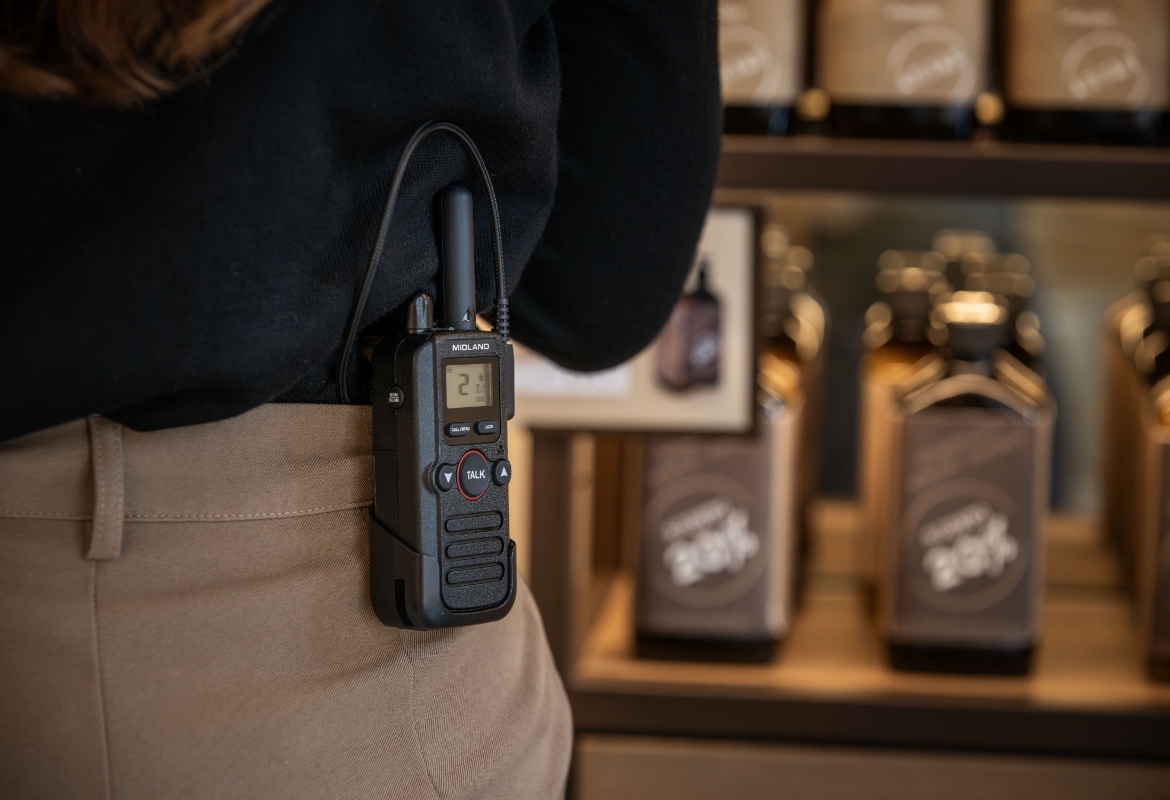
From the experience in the field alongside leading international fashion companies, such as Calzedonia, Tezenis, Zara and Mango, Midland has developed solutions designed specifically for these dynamics.
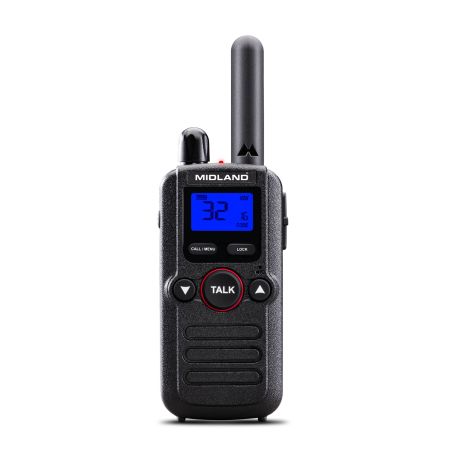
One example is the Midland BR180, designed to accompany staff throughout the working day. Its low weight, rotating clip and compatibility with discreet earphones allow you to communicate quickly without interfering with the direct relationship with the customer.
Equipping the store with walkie talkies does not only mean buying electronic tools, but redesigning the workflows of the staff. Reducing the empty steps of employees translates into time savings that can be calculated on an annual basis, in a more serene team and, above all, in a customer followed quickly and professionally.
Do you want to make the work of your store more efficient?