



How a Motorcycle Intercom Works

Riding a motorcycle is, for many, the ultimate expression of freedom. However, until a few years ago, this freedom came with a limitation: communication isolation. Once the visor was down, the rider was cut off from the world, unable to talk to the passenger or other riders except through complicated and often risky gestures. Today, the situation has radically changed. If you are planning your first big trip or simply want to make your daily rides more technological, it is essential to understand what intercoms are and the technical principles that govern their effectiveness. In this guide, we will explore in detail how a motorcycle intercom works, analyzing the wireless technologies that make riding more connected and safer.
What are intercoms and why are they essential?
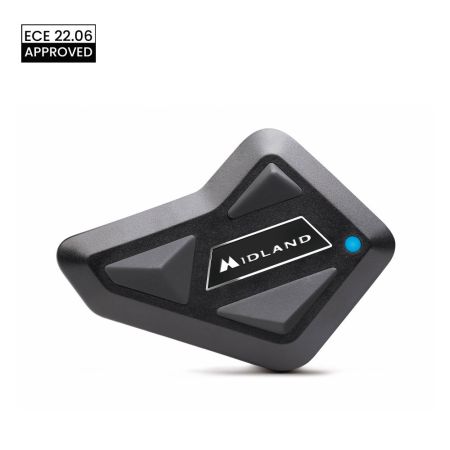
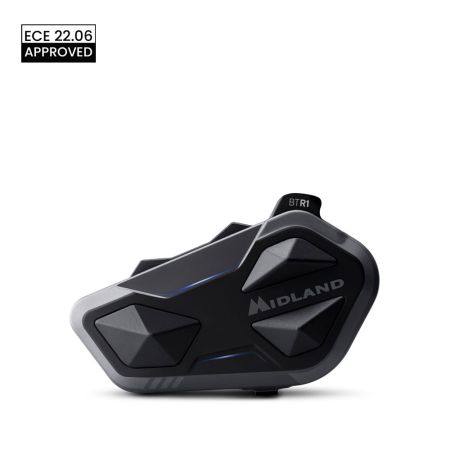
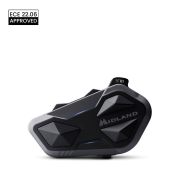
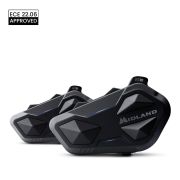
In simple terms, when we ask what intercoms are, we are referring to sophisticated wireless communication systems specifically designed to be integrated into helmets. These are not just simple earphones, but electronic control units capable of managing multiple audio sources simultaneously. A modern motorcycle intercom consists in three main elements:
The external control unit: the “brain” of the system, attached to the helmet shell.
The speakers: ultra-thin, positioned inside the padding at ear level.
The microphone: wired for full-face helmets or boom-style for modular and open-face helmets.
These devices are not only for talking: they allow you to listen to GPS directions, answer calls without taking your hands off the handlebars, and enjoy your favorite music with high sound quality.
How a motorcycle intercom works: signal transmission

The core of how a motorcycle intercom works lies in its ability to transmit audio signals over short to medium distances without the use of cables. But how does this connection take place technically? The device converts the voice captured by the microphone into digital data, which is then transmitted wirelessly via radio waves to another intercom (to communicate with fellow riders) or to a mobile device (for phone calls or navigation). The stability of this signal is ensured by specific communication protocols, which today fall into two main categories.
Bluetooth Technology: this is the most widespread and proven solution and works by creating a direct pairing between two or more devices. It is ideal for rider-passenger communication or small groups. The system creates a sort of “chain”: rider A talks to rider B, who then relays the signal to rider C. It is very energy efficient, but has a limitation: if one element of the chain moves too far away, the connection is lost for all subsequent riders.
Mesh Technology: represents the most recent and advanced evolution. Unlike Bluetooth, it doesn’t create a chain but a dynamic “network.”
Each intercom is connected to all others simultaneously. This means that if one rider goes out of range, the network instantly “repairs” itself without interrupting communication among the remaining participants. It is the optimal choice for those traveling in large groups and seeking maximum stability without manual pairing procedures.
Understanding these differences is the first step in choosing the right intercom, depending on whether your priority is rider-passenger communication or coordinating a group of motorcycles.
The main advantages of a motorcycle intercom
Understanding how a motorcycle intercom works helps clarify its real benefits while riding. This is not just about comfort, but a true evolution of the two-wheel experience:
Active safety: Managing your smartphone via voice commands or listening to GPS directions allows you to keep your eyes on the road and hands on the handlebars at all times.
Group coordination: Being able to report hazards, oil spills, or the need for an emergency stop in real time increases safety for all participants.
Reduced fatigue: Modern noise suppression systems filter wind and engine noise, enabling clear communication and reducing physical and mental stress on long journeys.
Shared experience: Being able to comment on the scenery or share music with the passenger transforms the trip into a social moment.
Practical tips for your first use

Each device can be customized to optimize its performance through our dedicated app. Midland Connect is the official app that turns your smartphone into the control center of your intercom, allowing you to manage every function directly from the screen. Even while traveling, you can customize audio, adjust VOX, and activate automatic gain control (AGC). The app also allows you to store 6 FM stations with RDS,
listen to web radio, and easily pair other devices. Intuitive and safe, it even notifies you of new firmware updates so you can always travel at peak performance. Before getting on your bike, there are a few things to know before traveling with your intercom. Among the most important, always remember to:
Perform an audio check while stationary to verify speaker positioning.
Update the device firmware using BTUpdater.
Fully charge the battery (intercoms often offer more than 20 hours of talk time).
Now that you know exactly what intercoms are and how they work, all that’s left is to choose the technology that best suits your style and enjoy the road with an extra gear.