



What is the Radio Montana Network for and why it is essential

Those who regularly frequent the trails know well that the mountains are an environment as fascinating as it is unpredictable. One of the main challenges for every hiker is isolation: in many valleys and high-altitude areas, the smartphone signal is absent or too weak to ensure reliable communication. In these scenarios, radio technology becomes the true umbilical cord with security.
Among the most important initiatives created to support those who walk, ski or practice climbing, the Mountain Radio Network (RRM) stands out. It is not just a technical system, but a national project operating in Italy that aims to increase traceability and mutual support between hikers. In this guide we will see in detail what the Radio Montana Network is and what it is for, how to configure your devices and why it has become a standard for outdoor prevention.
What is the Radio Montana Network
We can define the Mountain Radio Network as a community of mountain users who use free use radio equipment in the PMR-446 band to create a widespread safety network throughout the Italian territory. The project was created to offer hikers a common frequency on which they can communicate in case of need or to exchange useful information, such as weather conditions and the state of the trails. Unlike the radio channels of the Alpine Rescue, which operate on protected civil/professional frequencies, the RRM is based on collaboration between equals. It serves to ensure that, in case of emergency, one's request can be intercepted by other hikers or refuges located within range, which can then act as a bridge with official rescue (112/118). For this reason, it's crucial to know which walkie talkie to choose to ensure maximum compatibility and range.
How does the Radio Montana Network work?
The technical principle is that of cooperation. But, operationally, how does the Radio Montana Network work? The system uses the direct propagation of radio waves between two or more devices. Since walkie talkies operate "as the crow flies", the presence of many users tuned to the same frequency allows them to cover areas that would otherwise remain isolated. The project does not replace classic emergency calls, but complements them. If a user finds himself in difficulty in an area without a cellular field, he can launch an appeal on the dedicated channel. Other hikers, perhaps located on a higher ridge or in a more favorable position for reception, can receive the message and alert the competent authorities. Understanding how walkie talkies work in these contexts is essential to properly manage the broadcast and maximize the chances of being heard.
What is the frequency of the Radio Montana Network?
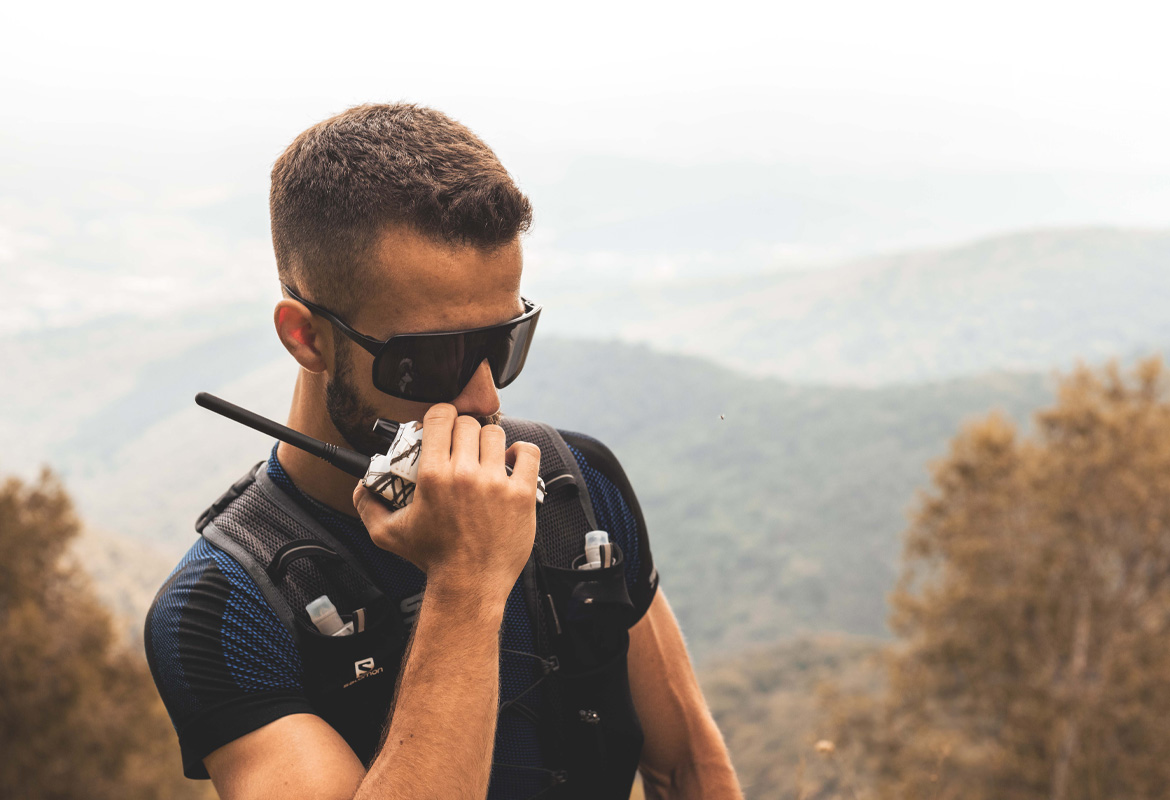
To ensure that all users can communicate with each other, a single nationwide standard (and partly a European one) has been established. The reference mountain radio network frequency is Channel 8 of the PMR446 band, while in France, Spain, the United Kingdom and Portugal, the standard channels are 7-7. However, tuning in to channel 8 alone is not enough: to avoid listening to interference or irrelevant communications, the project uses a specific "sub-tone". The standard is the so-called "8-16":
Channel: 8
Sub-tone (CTCSS): 16 (corresponding to the 114.8 Hz frequency)
Using this filter allows the radio to remain silent until it receives a signal transmitted with exactly the same code, ensuring that the channel remains "clean" for safety communications.
How to connect to Rete Radio Montana
If you own one of the Midland models mentioned above, the connection is almost instantaneous. In general, here are the basic steps to get up and running:
Equip yourself with a PMR446 radio: Make sure you have a reliable device (models like the G13 Pro or G18 Pro are ideal for weather resistance).
Set Channel 8: Select the primary channel on the display.
Configure the CTCSS 16 sub-tone: If you are not using a preset function, go to the sub-tone menu and select the number 16.
Carry out a transmission test: Try communicating with your teammates to check the configuration.
Constant monitoring: keep the radio on while walking, preferably placed on the shoulder strap of the backpack so as not to shield the antenna.
Remember that registering on the official portal of the Radio Montana Network allows you to obtain a unique identifier (ID), which is essential to be located more quickly by rescuers.
In any case, Midland provides numerous devices designed specifically for emergency management.
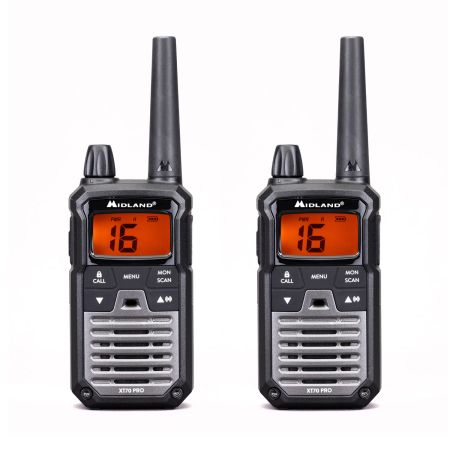
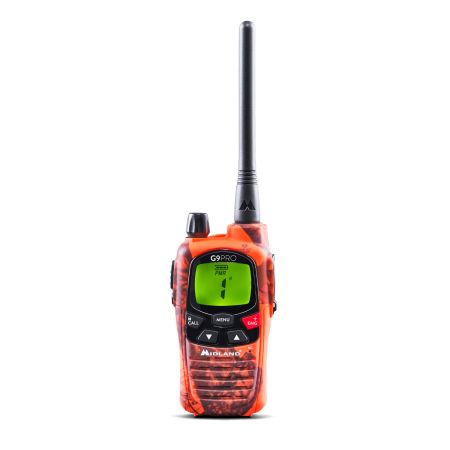
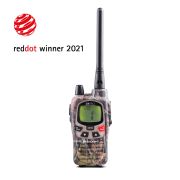
For example, the Midland G9 Pro is among the most chosen models by mountain professionals: in addition to robustness and double PTT for power management, it includes an "Emergency" button that facilitates emergency calls. If, on the other hand, you are looking for a versatile device for high-altitude trekking, the Midland XT70 Pro represents excellence in terms of range (up to 12 km) and ease of use.
Why radio is an investment in life
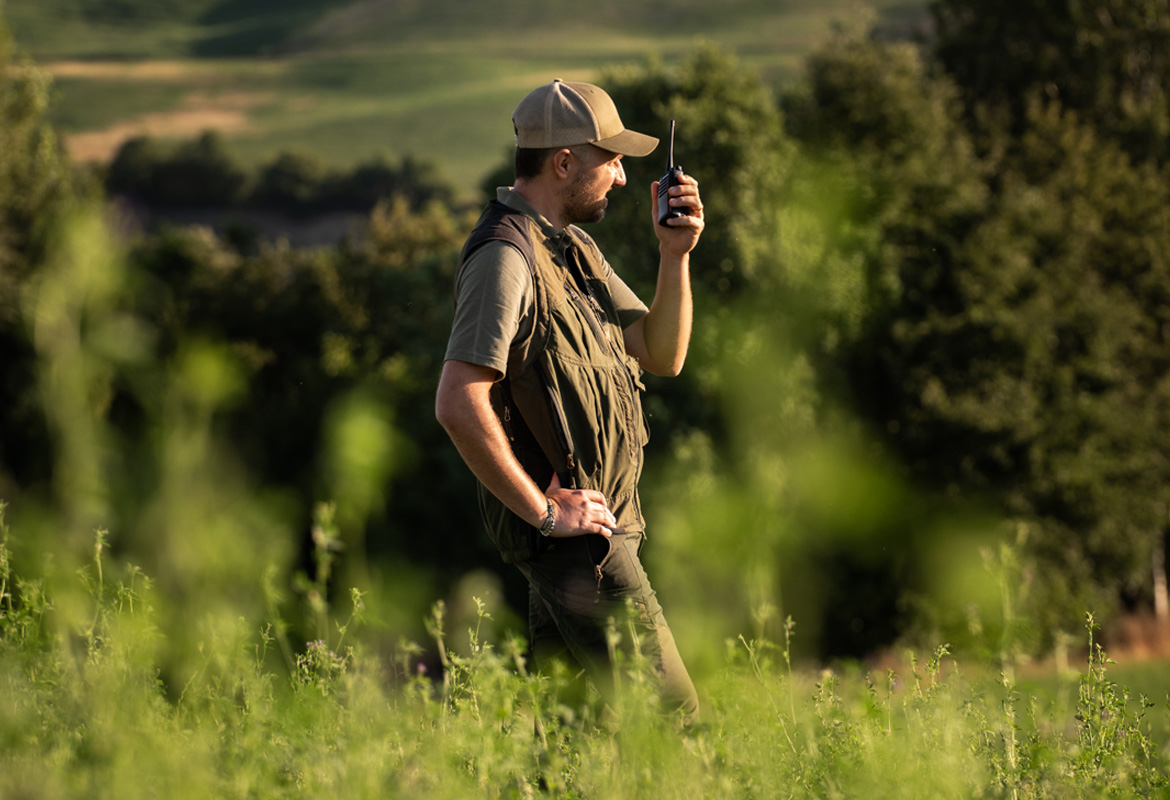
In a harsh environment such as the mountainous one, independence from terrestrial infrastructures is the only real guarantee of connection. Choosing quality hardware turns every excursion into a more conscious experience. Collective safety comes through individual responsibility: being tuned into 8-16 means not only protecting yourself, but being ready to help anyone else on the path.
Your safety in the mountains starts with a frequency.
Discover all the Midland two-way radios ideal for the Radio Montana Network