



Trail Cameras: everything you need to know about how they work

There's a whole world that comes alive in the woods—or perhaps right at the edge of your property—the moment you walk away. To capture these moments without disturbing the environment and without watching the area for hours, the essential tool is the trail camera.
Originally created for wildlife monitoring, these “technological sentinels” have evolved rapidly, becoming fundamental tools even for security and surveillance of remote areas. But to obtain sharp images and avoid wasting battery life, it’s not enough to simply strap them to a tree: you need to understand exactly what trail cameras are and how their activation mechanisms work.
What are trail cameras
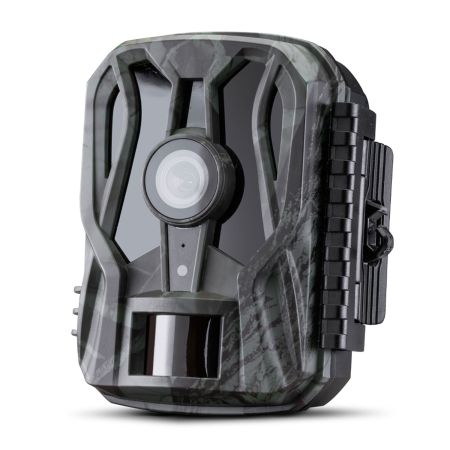
Often mistaken for regular surveillance cameras, trail cameras are compact digital devices designed for outdoor use. Enclosed in rugged, camouflaged housings—often with IP65 or higher certification—they are built to operate reliably even in harsh weather conditions, from winter frost to the persistent humidity of the forest undergrowth. Unlike a traditional camera, a trail camera integrates a high‑resolution lens, an infrared illuminator for night vision, and a heat sensor. This combination allows the device to “listen” to its surroundings for weeks or months, powered by standard batteries, becoming an invisible eye able to document what happens in remote areas without any human intervention.
What trail cameras are used for
Thanks to their autonomous and discreet operation, trail cameras are used in various fields—from scientific research to security and environmental monitoring. Their versatility makes them highly effective tools for collecting data and documenting events where other devices would be impractical or unusable.
Wildlife study and research: ideal for biologists and enthusiasts who want to observe natural animal behavior—especially of nocturnal or elusive species—without leaving scents or traces.
Rural security and surveillance: the most efficient solution for monitoring isolated properties, cabins, or warehouses where electricity isn’t available.
Smart data management: modern WiFi trail cameras allow remote viewing and downloading of photos and videos directly to your smartphone without having to retrieve the SD card.
Prevention of environmental crimes: perfect for monitoring areas exposed to illegal dumping or vandalism, providing photo and video evidence even in total darkness.

How a trail camera works
Technically, a trail camera works using a system designed to maximize efficiency and battery life. The device stays in standby mode and activates instantly only when it detects movement. The heart of the system is not the lens but the PIR sensor (Passive Infrared), which detects heat variations in the environment. Every living being emits heat; when an animal or a person crosses the sensor's detection zone, the sudden thermal change triggers the camera. This activation speed—called trigger time—is crucial: the best devices are extremely fast, shooting in fractions of a second to avoid capturing an empty frame after the subject has already passed. Another crucial aspect is the ability to capture night images without alerting animals or intruders. This is achieved through:
850 nm IR LEDs (Low Glow): slightly visible red glow, with greater range and depth—ideal for wildlife photography.
940 nm IR LEDs (No Glow): completely invisible to humans and animals—perfect for surveillance applications.
How to optimize a trail camera
To get the best performance, proper configuration is essential:
Shooting mode: single photo, burst, or video.
PIR sensitivity: higher in summer (lower temperature contrast), lower in winter (higher contrast).
PIR interval: shorter (5–10s) for frequent passage areas, longer (30–120s) to save battery.
Correct positioning also plays a key role:
Height & tilt: 1.5–2 m, slightly angled downward.
Orientation: avoid East/West to prevent overexposure at dawn/dusk.
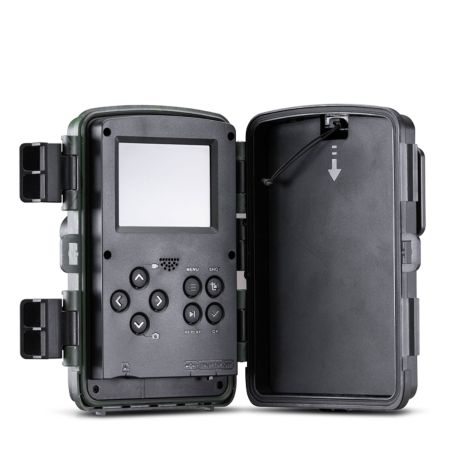
Activation: start recording using the dedicated controls.
Why choose a trail camera
A trail camera is the best ally for anyone who wants constant monitoring without being physically present. It respects the environment, captures moments that would otherwise remain invisible, and withstands harsh outdoor conditions—ensuring months of continuous operation. Whether your goal is property protection or wildlife observation, a reliable trail camera transforms waiting into valuable data, offering clear images and essential video evidence.